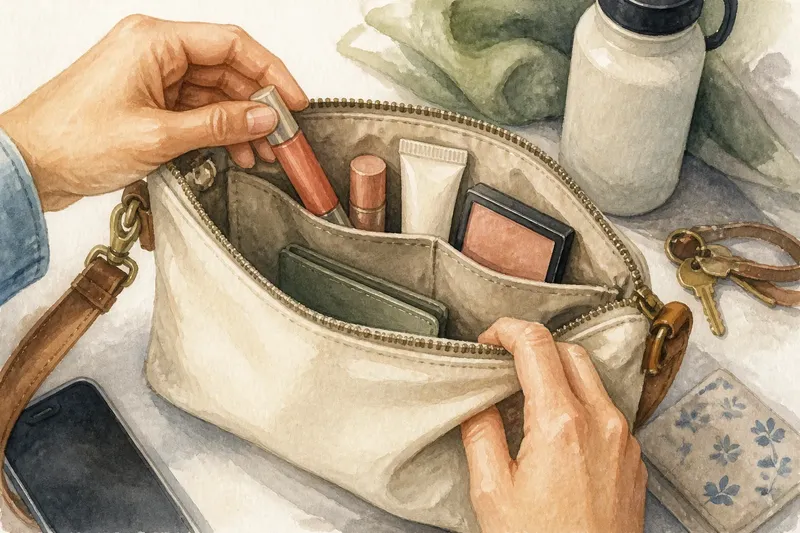
The More-Is-More Trap in a Post-Workout Routine
A post-workout routine should meet your actual needs, not add another chore. Use a quick transition plan to feel comfortable and ready for what comes next.

You finish a workout, pull on a clean shirt, and notice the mirror is fogged from the locker-room shower. A post-workout beauty routine can become a second workout if every session triggers the same full sequence. Instead, treat the transition as a small logistics problem: decide what needs attention before you leave, what belongs at your next stop, and what should not be repeated.
What does a post-workout routine need to solve?
Separate the immediate transition from your usual personal-care routine. A gym changing room may call for a clothing change and a quick refresh; your bathroom at home may be a better place for products that need time, privacy, or a sink you can use comfortably.
Before reaching into your bag, identify the specific snag: damp fabric, sweat that feels uncomfortable, hair that will not sit as you want, or a makeup look that needs attention before a meeting. If none of those affects your next activity, you may not need a cosmetic step at all.
Choose the next destination first. It changes whether a rinse, a clean shirt, or a return to your regular routine makes sense.
How can you plan the transition by destination?
Use the place you are going as a boundary, not as a reason to repeat everything you own. At home, you can complete your regular routine in its usual setting. On the way to work, focus on comfort and the one visible detail that matters for your plans. At an errand, a change of clothes may be enough.
- Heading home: If you can shower soon and feel comfortable for the trip, then save your full routine for home; otherwise, rinse or change the area that feels uncomfortable.
- Going to work: If damp clothing is the main issue, then change it; if your face feels uncomfortable too, then use a familiar rinse or product, or wait until a suitable sink is available.
- Going straight to an errand: If you feel presentable and comfortable, then leave your face and hair alone; otherwise, make one targeted adjustment, such as smoothing your hair or refreshing a specific area.
- Staying at the gym: If you have another activity there, then change out of wet clothes before it; if you are simply leaving, then skip extra steps that do not improve your departure.
- Facing a makeup touch-up: If makeup has visibly shifted and you want to address it, then correct that spot with a familiar product; if it still looks and feels fine, then do not reapply it automatically.
- Using a shared changing room: If a product needs a long application or makes a mess at the sink, then save it for home; if it is quick and appropriate for the space, then use it only for the need you identified.
What should you do when sweat, skin, or hair feels different?
Respond to the condition you can observe, not to the fact that exercise happened. Sweat on your face, a tight-feeling patch of skin, and flattened hair are separate problems; they do not automatically call for a cleanser, several skin-care layers, and a styling routine in one visit.
Should you cleanse after every workout?
Not necessarily. If sweat feels uncomfortable or you want to rinse before your next stop, use a rinse or a familiar cleanser according to its label; if your skin feels fine and you are heading home, you can wait for your usual routine.
Should you reapply moisturizer after exercise?
Let your skin’s condition guide you rather than treating moisturizer as an automatic post-workout step. If a familiar moisturizer helps with discomfort, use it as directed; if your skin feels comfortable, there may be no reason to add it before you get home.
What can you do about workout hair?
Choose the smallest adjustment that suits your next setting, such as combing, tying it back, or letting it settle. If your scalp feels uncomfortable or your hair is wet, changing your plan to rinse or wash may make more sense than adding styling products.
When should you stop using a product?
If a product causes discomfort or seems to irritate your skin, stop using it and consider asking a qualified skin-care professional for advice. Follow the product label, and do not treat a post-workout routine as a substitute for individualized care.
How can you tell whether a step earns its place?
Give each step a clear job and a visible decision point. “Use toner” is a product instruction without a reason; “rinse my face because sweat feels uncomfortable before I leave” connects an action to a current need. That distinction helps keep gym-bag routines from turning into copies of home routines.
Imagine you finish a lunchtime class with a comfortable face, a damp shirt, and a meeting at the office. Your starting inputs are those three conditions, plus access to a clean shirt and a comb in your bag. You change shirts, comb your hair, and leave your skin-care products zipped away; the resulting decision is to save your usual routine for home because neither your face nor your plans call for it before the meeting. If your face instead felt uncomfortable, the tradeoff would change: you could add a familiar rinse or product, provided the changing-room setup made that practical.
How should you handle products that cause trouble?
Keep product decisions separate from the pressure to look freshly reset. If something makes your skin uncomfortable, stop and check its directions; a qualified skin-care professional can help if the problem continues or you are unsure what to do. For products you tolerate, consider where and when they work best: a sink-side step may belong at home rather than in a crowded locker room.
Also account for the setting. A small gym sink, a shared counter, and a commute are not convenient places for every application. Choose a different time or location when a product needs more space, cleanup, or privacy.
What is a useful post-workout routine?
A useful post-workout routine is a sequence of decisions, not a fixed product lineup. Check the next destination, identify the condition that needs attention, and choose an action that fits the place you are in. For a post-workout routine that avoids the more-is-more trap, let the setting determine what happens now and leave the rest for its proper time.
Before you zip your bag, ask whether each action solves a current problem or simply repeats a familiar ritual. That small distinction can make the transition feel less like another appointment and more like a clean handoff to whatever comes next.