A Two-Minute Morning Routine That Fits Before You Leave
Build a two-minute morning routine around your departure time, so grooming and personal care fit the morning you actually have without rushed decisions.
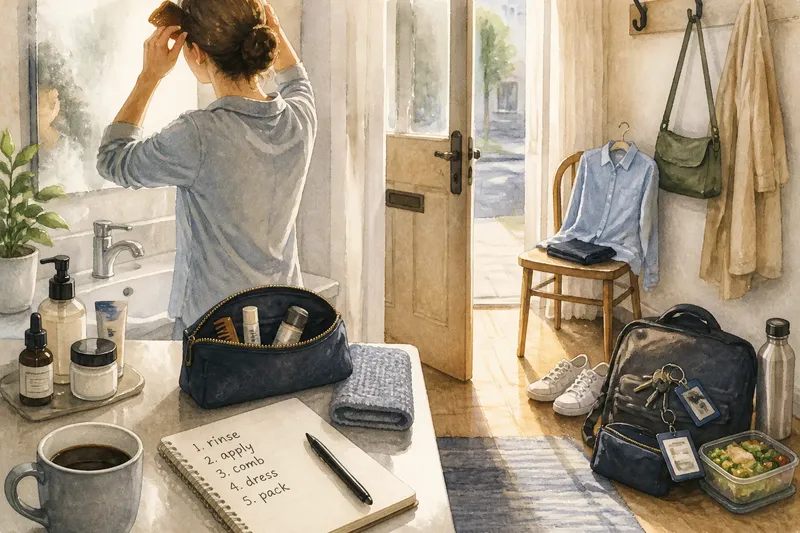
Your coffee is brewing, your shoes are by the door, and the bathroom mirror is fogged from a quick shower. A two-minute morning routine works best when it is built backward from the moment you leave, not from a list of products you feel obliged to use.
How do you plan a two-minute morning routine around leaving?
Start with the last few minutes before departure. Decide what must happen in the bathroom, what can happen while you get dressed, and what should be packed for later. This turns the routine into a sequence tied to real places and actions rather than a miniature version of a longer beauty routine.
Write down the order once, using verbs: rinse, apply, comb, dress, pack. Group actions that use the same spot or tool. Keep face care at the sink, hair styling near the mirror, and anything intended for a gym bag or office pouch by the bag itself.
Do not speed through label directions or careful application to meet an exact time. If a product needs more attention than the morning allows, move it to a calmer part of the day or choose a different time to use it.
Which morning actions belong at home, and which can travel?
Separate tasks by location. A quick rinse, moisturizer, or hair adjustment may be easiest at home; a lip balm or compact comb may be more convenient in a bag. The right choice depends on where you will be and whether the item can be stored and used appropriately.
- Check the sink area: If the counter has room for the items you use before dressing, keep those items there; if it is crowded, move occasional products to a drawer or shelf.
- Check the mirror: If you need the mirror for a careful grooming action, do it before leaving; if the action does not require one, consider doing it while you get dressed.
- Check the bag: If an item is suitable for carrying and you will need it away from home, place it in a designated pouch; if it is awkward or unsuitable to carry, use it at home instead.
- Check the product directions: If they call for a particular application method or timing, follow them and make room elsewhere; if no special direction applies, fit the step where it naturally belongs.
- Check the commute: If you will have a suitable private place and enough time for a grooming task, pack its tool; if not, finish that task at home or leave it for later.
- Check what you actually use: If an item serves a specific need on that morning, put it in the sequence; if it has no clear job that day, store it out of the way rather than carrying it by default.
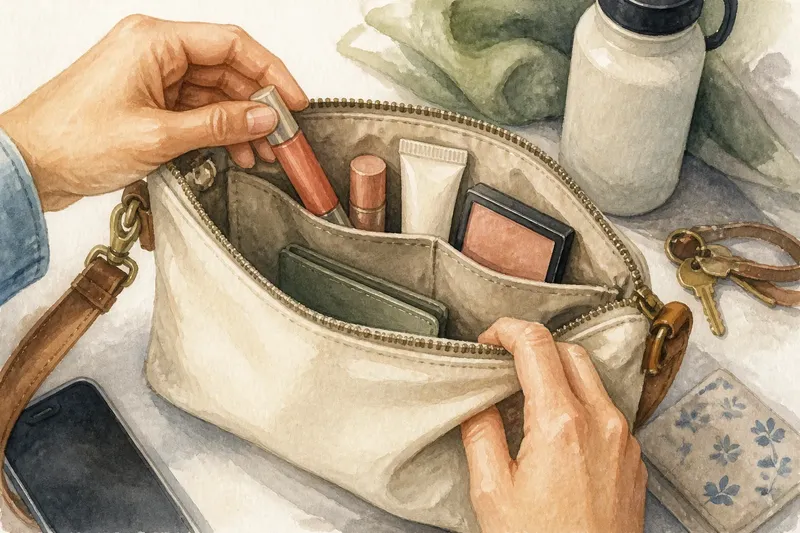
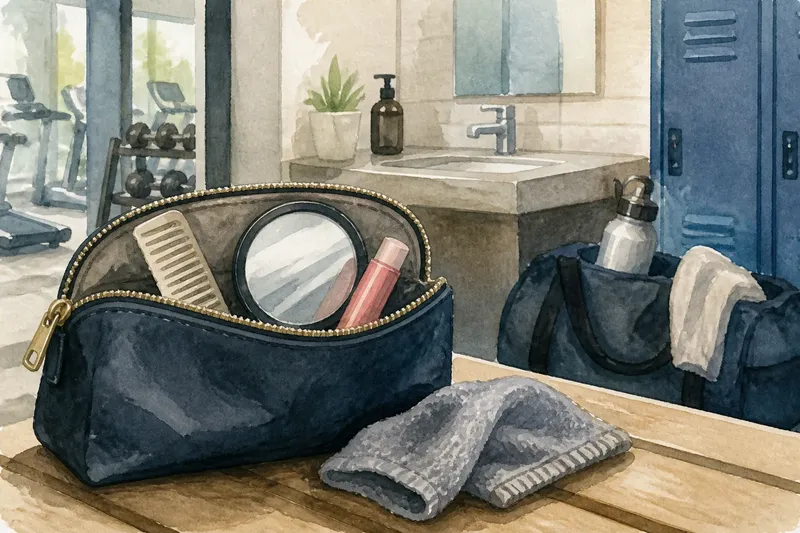
Keep portable items together in a small pouch so they do not disappear among keys, receipts, and chargers. For products with storage or handling directions, follow the label. A pouch should make the routine easier to locate, not turn into a second cluttered counter.
How can you prepare the route from bed to door?
Set up the route the night before with ordinary items you already use: put clothes on a chair, place your bag by the exit, and return grooming tools to their usual spots. Keep the bathroom path clear and avoid leaving products where they could be knocked into the sink.
Give each action a cue. A comb beside the mirror signals a quick hair check; a packed pouch beside your keys signals that the portable items are ready. Cues work best when they are placed at the point where the action should happen, not scattered across the room.
Say you have a hypothetical morning with a work badge, a packed lunch, and a bus to catch. You decide that face care and a hair check happen at the bathroom mirror, while lip balm goes into the pouch beside your bag. The expected observable result is that each item has a location tied to a specific moment, so you spend less time searching before departure; the tradeoff is that the pouch must be returned to its place after use.
What should you do when the schedule changes?
Make two versions of the route: one for a usual morning and one for a late start. The late version should change the order or location of tasks, not force you to rush through anything that needs care. For example, you might set out clothes the night before and move a nonessential styling task to later.
If the bathroom is occupied, identify one action that can happen elsewhere without making a mess, such as brushing hair in the bedroom. If you will be heading directly to a workout or another activity, pack only the personal-care items you will realistically use afterward.
Review the route when a commute, workplace, or regular activity changes. Keep the cues that still match your movements and move the rest. You do not need to rearrange the whole morning because one stop or task has changed.
What do readers ask about a two-minute morning routine?
Should you use a timer for a two-minute morning routine?
A timer is optional; the phrase is a reminder to keep the sequence brief, not a demand to finish at a specific second. If watching the clock makes you rush, use the departure cue instead, such as getting dressed as soon as the bathroom steps are done.
Can you do part of your routine after leaving home?
Yes, when the task and setting make that sensible. Pack suitable items in a pouch and choose a place where you can use them comfortably and privately; otherwise, complete the task at home or defer it.
How do you decide which products to carry?
Check whether you will use each item away from home, whether it can be carried as directed, and whether it is easy to retrieve from your bag. If any answer is no, leave it at home or choose a more suitable place in your routine.
What if your morning routine keeps running late?
Notice where you pause: searching for a tool, waiting for a shared mirror, or deciding what to wear. Change that specific point, such as setting out the tool or clothing the night before, and move a task elsewhere if it still does not fit.
How can you tell whether the route is working?
Look for practical signs: you know where each item belongs, you can move from one task to the next without searching, and a late start does not force you to handle products carelessly. If you regularly lose time at one point, adjust that point rather than rebuilding the entire routine.
A two-minute morning routine is easier to keep when it follows your route through the home and out the door. Tie each action to a place, prepare the items that need to travel, and make the departure cue your reminder to stop adding tasks.