How Beauty Went Portable, From Dressing Tables to Gym Bags
How beauty went portable: trace the move from fixed dressing spaces to bags and lockers, and choose a compact routine that fits real transitions.
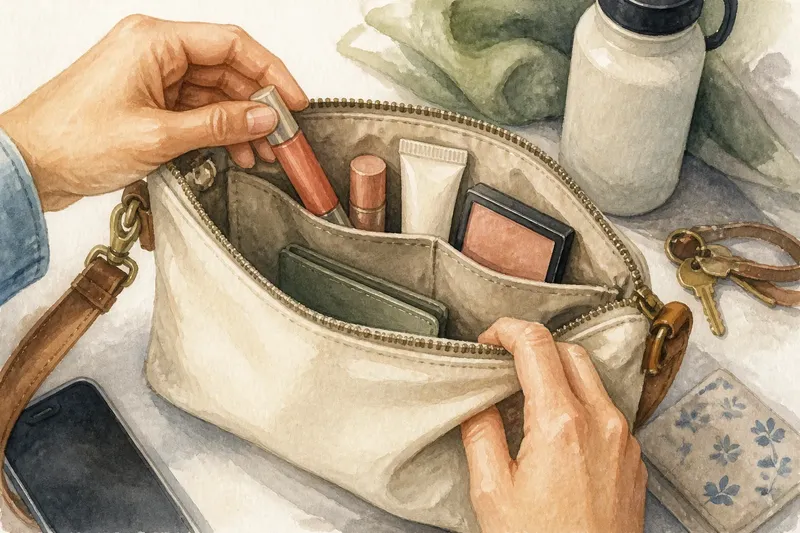
A lipstick slips beneath a car seat while hand cream waits by the bathroom sink. Those two locations capture how beauty went portable: some care still happens at home, while selected products travel for the moments between places.
There is no single timeline behind that shift. It is visible in contemporary routines that move through commutes, workplaces, gyms, and social plans, as well as in products designed for pockets and bags. The change is less about replacing one room than about distributing a routine across several settings.
Why does beauty travel between places?
A fixed dressing area gives a routine a home base: a mirror, brush, and products stay within reach. A portable routine answers a different need. It lets someone handle a small task after exercise, during a break, or before heading out, provided the setting makes that task comfortable.
Not every person or day calls for this. Someone who gets ready at home and returns there before evening may have no reason to carry cosmetics. Another person may have a long gap between activities and prefer to keep a comb or lip balm nearby. The routine follows the schedule, rather than requiring everyone to adopt the same one.
Think of portability as a change in location and organization: a few chosen objects move from a dedicated surface into a pouch, pocket, locker, or desk drawer. The dressing table can remain useful for slower preparation, while a smaller set handles brief transitions.
What changed when products became easier to carry?
Packaging made certain tasks easier to take along. A capped balm can be handled without opening a jar; a compact mirror works where there is no wall mirror; a twist-up color product avoids needing a separate brush. These formats do not create the desire to groom between activities, but they can make a familiar task more manageable away from home.
Portability also changes how a product is judged. At home, a container can sit open on a stable surface. In a bag, it needs a secure closure and a shape that is easy to find and handle. A tiny item may still be inconvenient if it needs several tools, clean hands, good light, or a broad counter.
Choose packaging for the actual task. If a product needs careful application, a rushed hallway may not be a suitable setting, no matter how compact the container is.
How does a portable routine differ from a dressing-table ritual?
A dressing table supports space, sequence, and time: products can be arranged, a mirror stays put, and preparation can unfold without packing and unpacking. A portable routine is more selective. It usually centers on a specific task and adapts to whatever the location provides, such as a restroom mirror or gym locker.
This distinction helps explain why the two arrangements can coexist. Keep products that need room or deliberate application at home. Carry only the items tied to a transition you actually make, and use them where there is adequate light, clean hands, and permission to do so.
One practical question can clarify the difference: does this task need a prepared space, or can it be handled safely and comfortably in the places I visit?
What role do gyms, lockers, and shared spaces play?
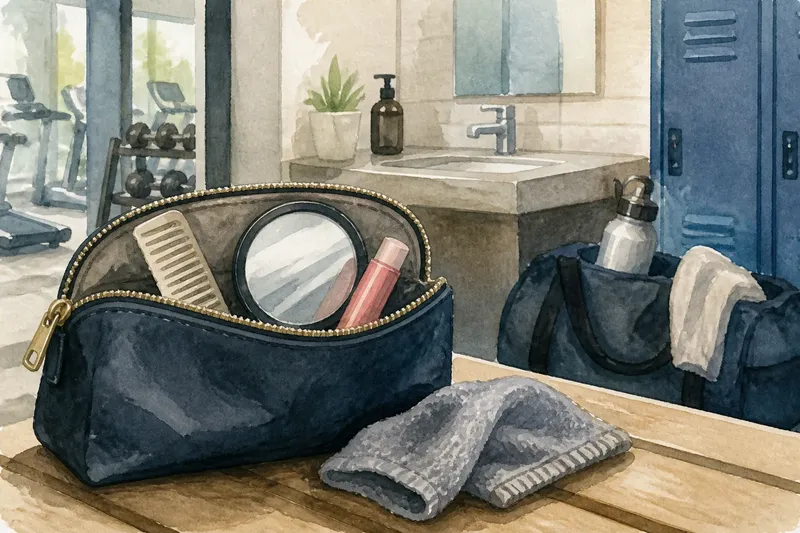
A gym bag makes portable beauty easy to see because it travels between activities and may hold personal-care items alongside workout gear. The contents might include a comb, face cloth, deodorant, or a product someone uses after exercise. What belongs there depends on the person’s plans and the facilities available, not a universal set of essentials.
Shared spaces impose limits. Keep belongings contained, avoid occupying a sink or counter longer than needed, and leave the area clean for the next person. If there is no suitable surface or the room is crowded, wait for a better place rather than forcing a routine into an awkward setting.
Let the room set the scale of the routine, not the size of the bag.
How can you choose what to carry?
Start with one real transition, then connect every object to a task and a setting. Use this decision list while packing; each result points to an action rather than adding an item by default.
- Transition: Check whether you regularly move from one activity to another before returning home. If you do, pack only items for that transition; if you do not, keep them at home.
- Task: Check whether you can name a specific action for the item, such as combing your hair or checking your appearance. If you can, keep it; if you cannot, leave it out.
- Setting: Check whether the place has the light, mirror, and room the task needs. If it does, carry the item; if it does not, choose a simpler task or wait until you have a better setting.
- Hands and surfaces: Check whether you can use the product with clean hands and without taking over a shared counter. If you can, include it; if you cannot, skip that task in the shared space.
- Closure: Check whether the cap closes securely and the container stays contained in your bag. If it does, pack it in a pouch; if it does not, leave it at home or choose a better-sealed format.
- Duplicates: Check whether another item already handles the same task. If one option fits the setting better, keep that one; if neither earns a clear role, remove both from the portable kit.
- Use: Check after ordinary outings whether you actually reached for the item. If you did, keep it for that transition; if you did not, take it out and reassess only when a specific need arises.
Say you finish a morning workout, go straight to an office, and have a locker-room mirror but little counter space. You want to smooth your hair and check your face, and your hypothetical starting items are a comb, compact mirror, open jar of moisturizer, and a capped lip balm. You identify the comb and mirror as direct matches for the two tasks, then leave out the open jar because it needs a clean surface and could spread in the bag; you keep the capped balm only if dry lips are a task you expect to handle. The resulting choice is a compact set for the available space, with the tradeoff that moisturizer waits until you have a suitable place.
What do people ask about portable beauty?
Does portable beauty replace a dressing table?
No. A fixed space remains useful for routines that need time, room, or careful application. Portable items simply give selected tasks another setting.
Are travel-size products always easier to carry?
No. A familiar product with a secure closure may suit a bag better than a small container that is awkward to open. Choose by the task, package, and place of use.
How do I keep a gym-bag routine from becoming clutter?
Give each item a specific task and remove anything without one. A pouch can keep useful items together, but it cannot make an unnecessary item useful.
Where can I use products in a shared space?
Choose an area where personal care is permitted, keep the routine brief and contained, and leave surfaces clean. If the space is crowded or unsuitable, wait until you have more room.
What does portable beauty mean for your routine?
How beauty went portable is best understood as a shift in where selected care happens, not a demand to carry a full routine. A dressing table can remain the place for preparation, while a bag or locker holds only what suits a particular transition.
Notice which task you genuinely want to handle away from home, then match it to the setting and a container that stays secure. That simple decision keeps portable beauty useful without making every part of the day another occasion to groom.