A Commute-Ready Kit for Days That Change Midway
Build a commute-ready touch-up kit around your route and likely stops, so the right familiar items stay easy to reach without crowding your everyday bag.

Your train is delayed, rain has dampened your hair, and a work dinner has appeared on the calendar. A commute-ready touch-up kit works best when it is arranged around the places you pass through and the moments you can actually use it—not just the products you own.
Think of the kit as a small, portable station. Its job is to keep useful items together, protect the rest of your bag, and make a quick refresh possible in a restroom, at your desk, or before leaving work.
How should a commute-ready touch-up kit fit your route?
Map the places where you can comfortably pause: a station restroom, an office washroom, your desk, or a stop before an evening plan. Then match each possible touch-up to a place where you would be willing to do it. A mirror may be useful at a desk; applying a product while walking or riding transit may not be practical.
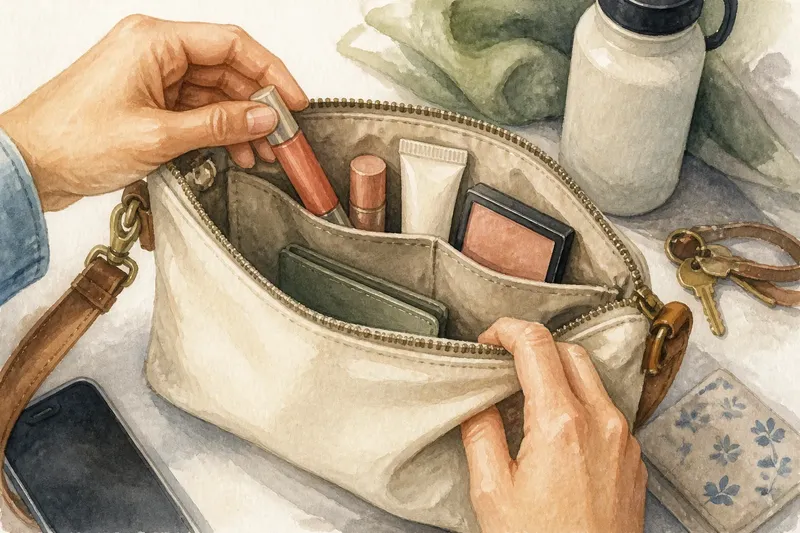
Also consider what needs to stay separate. A sealed pouch can keep cosmetics apart from keys and transit cards, while a small pocket can hold items you need to reach quickly. Keep anything that could leak or leave residue contained, and follow its label for storage and use.
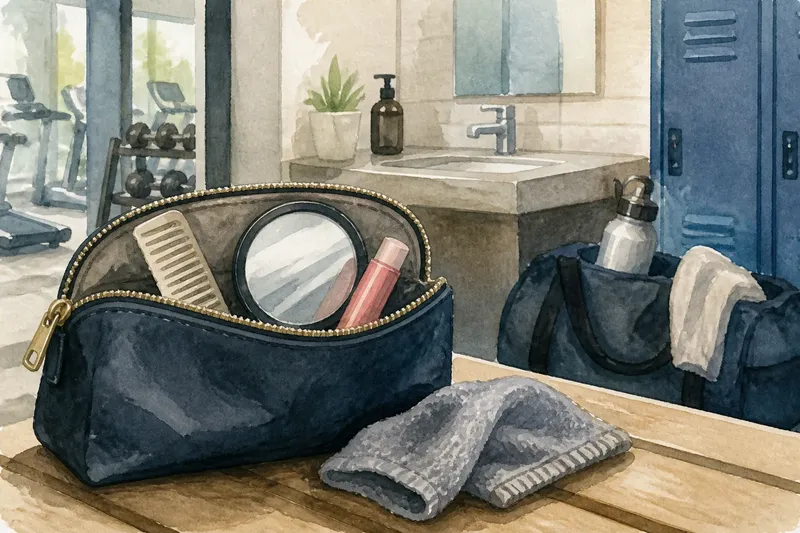
Say your route runs from a bus stop to an office, then to a café after work. You own a lip balm, a folding comb, and a compact mirror, and you are comfortable using them in the office restroom. Put those three items in a washable pouch and place it in an easy-to-reach bag pocket. The expected result is that a quick refresh can happen at the office rather than on the bus, with the rest of your bag kept separate.
What should you check before an item earns a place?
Make each choice specific: name the place where you would use the item, the need it addresses, and the alternative if it does not suit the commute. These checks help distinguish a useful portable tool from something that only looks sensible in a pouch.
- Check where you can use it: If you have a private or comfortable place to apply it, pack it; if not, leave it at home or choose a simpler item.
- Check whether it is familiar: If you already know how it feels and how to use it, consider packing it; if it is new or awkward, keep it at home until you can decide in a familiar setting.
- Check its closure: If the cap or lid closes securely, place it in the pouch; if it does not, replace the container or leave the item behind.
- Check for a clear purpose: If it addresses a need tied to your route or plans, pack it; if you cannot name that need, leave it out.
- Check for duplication: If it does a different job from the other items, keep it; if another item serves the same purpose and you prefer that one, carry only your preferred option.
- Check access and separation: If you can reach it without emptying your bag and keep it away from items it might soil, use that pocket or pouch; if not, rearrange the bag or choose a different container.
- Check its care directions: If the label allows the way you plan to carry and store it, pack it as directed; if the instructions do not fit your bag, leave it at home or choose a suitable alternative.
These checks are about fit, not whether an item is good or bad. A product may suit your home routine and still be inconvenient to carry or use between destinations.
How can you protect the contents in transit?
Choose a pouch that opens easily and can be cleaned according to its care instructions. Put capped or lidded items upright when the bag allows, and keep powders or anything that can mark fabric away from papers, headphones, and light-colored clothing. If a product needs particular storage conditions, follow the manufacturer’s directions rather than relying on the pouch to protect it.
Keep the pouch in the same pocket when you switch bags, or move it as a unit before leaving home. That makes it easier to find and reduces the chance of leaving one small item behind. If you use a clear pouch, check that its material and closure suit the items you carry.
After a spill or a damaged container, remove the affected item and clean the pouch as its care label permits. Do not keep using a product if its packaging or condition raises a concern; follow its label or ask a qualified professional when appropriate.
What questions come up when packing a commute-ready touch-up kit?
Should I keep the kit in my everyday bag?
That is useful if you carry the same bag regularly and can keep the pouch separate from other belongings. If you rotate bags, keep the items together in a pouch that is easy to transfer.
Can I include a product I have not used before?
A commute is often an inconvenient place to work out whether a new product suits you. Keep it at home until you know you want to use it and can follow its directions comfortably.
Where should I do a touch-up?
Choose a place where you can pause, use a mirror if needed, and handle the item without rushing. If that place is unavailable, wait for a more suitable stop rather than applying a product while moving through transit.
What if my route or plans change often?
Use a small core pouch for items you reach for across different days, then add something only when a recurring change gives it a clear purpose. If the item does not fit the new route or setting, leave it out.
How do you know the kit fits your commute?
Check that each item has a named use and a workable place, that the pouch keeps contents contained, and that you can reach it without unpacking the bag. A commute-ready touch-up kit should support a quick stop; it should not require you to carry a miniature bathroom cabinet.
Before your next commute, place the pouch in your usual bag pocket and check that keys, transit cards, and other daily essentials remain easy to reach. That final placement test makes the commute-ready touch-up kit easier to use at the places your route already provides.